

Editor
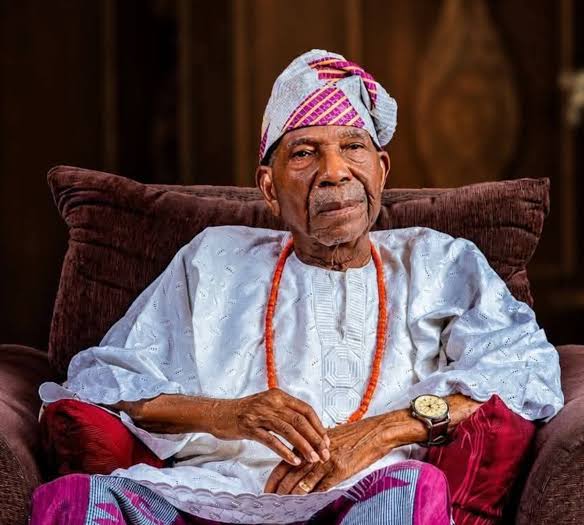
Pa Reuben Fasoranti, the educationist who devoted much of his life to advancing the political ideals of Chief Obafemi Awolowo and who led Afenifere through one of the most consequential internal crises in its history, died on Tuesday, October 20, 2026. He was 100.
He was born on May 11, 1926, in Uso, Ondo State.
Below are 10 important facts about his life.
- He lived through Nigeria’s major political eras
Fasoranti was born during the colonial period and lived through Nigeria’s independence in 1960, years of military rule, and the return to civilian government.
- His education extended beyond Nigeria
He attended Ondo Boys’ High School, Yaba Higher College and the University College, Ibadan. He later studied in the United Kingdom and Australia, obtaining a postgraduate diploma in Education from the University of Hull and a master’s degree in Education Administration and School Management from Macquarie University.
- He dedicated much of his life to education
Fasoranti worked as a teacher and school administrator before gaining wider prominence in politics. He founded Omolere Nursery and Primary School, Akure High School and St. Frances’ Academy in Igoba, Akure.
His interest in education reportedly continued well into old age.
- He held a key position in Ondo State’s government
From 1979 to 1983, he served as Commissioner for Finance under the late Governor Michael Adekunle Ajasin.
The period fell within Nigeria’s Second Republic, when the Unity Party of Nigeria governed Ondo State.
- He was influenced by Chief Obafemi Awolowo
Fasoranti was part of the political tradition associated with Awolowo and was involved with the Action Group and later the Unity Party of Nigeria.
The tradition placed emphasis on education, social welfare and regional development.
- He was linked to Ondo State’s creation campaign
Fasoranti was recognised as one of the political figures associated with the movement that culminated in Ondo State’s creation in 1976.
- He became one of Afenifere’s prominent leaders
Afenifere, a pan-Yoruba socio-political organisation, became a central platform for Fasoranti’s political activities.
He emerged as a recognised leader following the death of Pa Abraham Adesanya and remained involved in discussions concerning Yoruba interests, federalism and Nigeria’s political future.
- He advocated a return to democracy
Fasoranti opposed military dictatorship and supported the wider movement for democratic government.
According to President Bola Tinubu’s centenary tribute, he survived an assassination attempt attributed to agents of the regime of former military ruler General Sani Abacha.
- His family experienced painful losses
His wife died in 1991, while his daughter, Funke Olakunrin, was killed by gunmen in July 2019 at the age of 58.
Her death became a major national issue amid concerns about highway security.
- His Centenary brought tributes from across society
Fasoranti celebrated his 100th birthday on May 11, 2026. Political leaders, academics, traditional rulers and Yoruba stakeholders used the occasion to reflect on his contributions to education, public service and democratic activism.
His legacy is closely associated with school development, political organisation and the pursuit of democratic governance in Nigeria.
Franktalk