

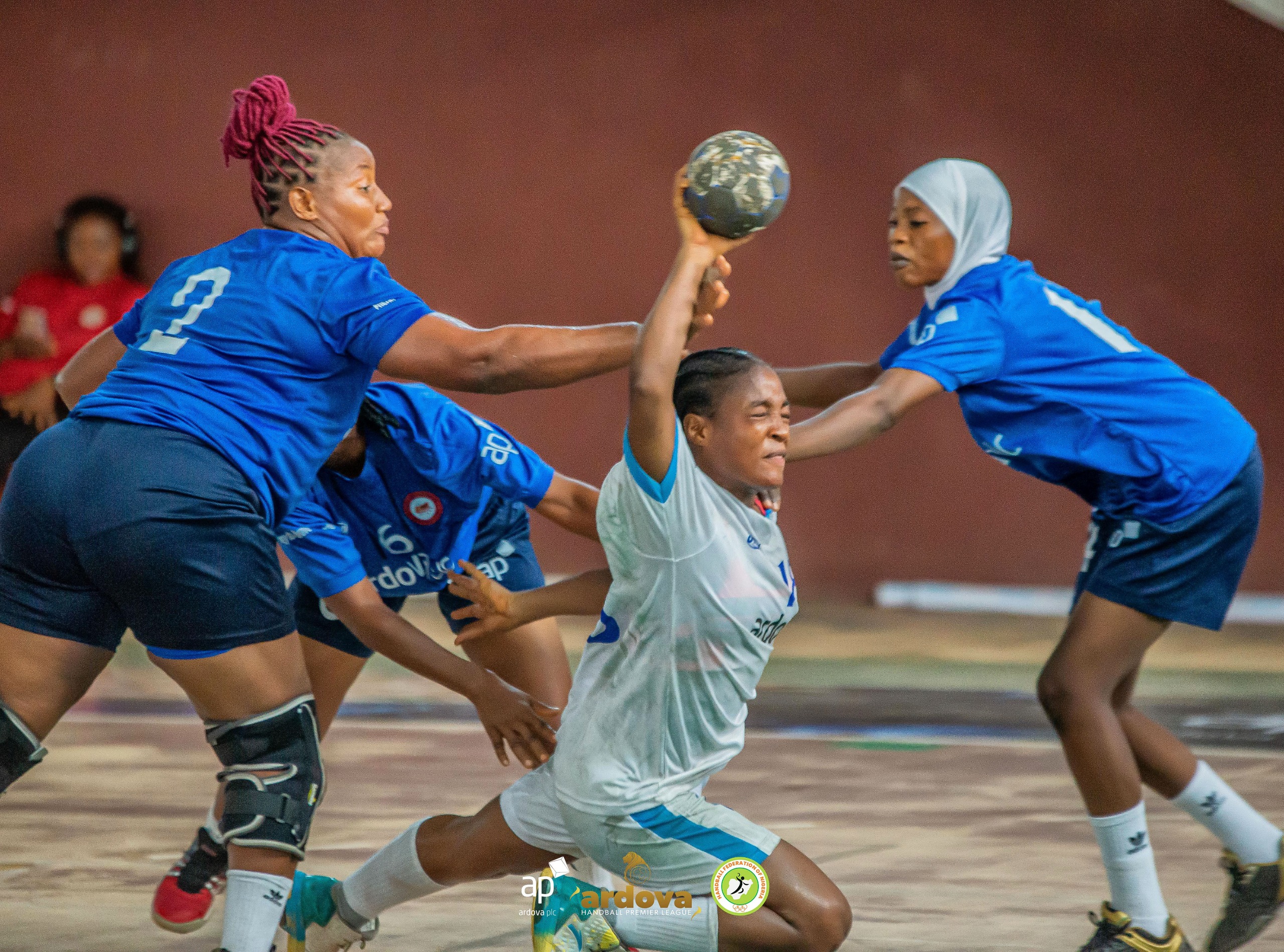

The Handball Federation of Nigeria (HFN) has introduced a mandatory national transfer and loan fee of ₦250,000 for players moving between clubs in the country, with the policy set to take effect from November 1, 2026.
The policy, contained in a circular signed by HFN President Jibril Saidu Ojih, is aimed at ensuring proper documentation of player transfers, protecting clubs that invest in players’ development and bringing Nigeria’s handball transfer system in line with the regulations of the International Handball Federation (IHF) and the Confederation of African Handball (CAHB).
The directive, according to Ojih, applies to clubs in the Nigeria Handball Premier League and National Division One, state associations, military and para-military clubs, and handball academies. It covers local transfers, international transfers, and loans involving male and female amateur and professional players.
Under the new policy, a club signing a player from another Nigerian club must pay a transfer fee of ₦250,000 to cover administrative charges and compensation for player development. Of the amount, ₦100,000 will go to the HFN as administrative charges, while ₦150,000 will be paid to the club releasing the player. The same fee applies to loans between Nigerian clubs for each season, with loans limited to one season but renewable.
The HFN President said the policy became necessary following its observation that several local and international transfers involving Nigerian players were being conducted without proper procedures, the involvement of licensed agents, or compensation for clubs responsible for training and developing the players.
He said such practices are contrary to Article 9 of the IHF Regulations, Edition of June 4, 2025, which addresses compensation and the protection of minors.
The new rules also provide additional compensation for clubs that have invested in players over a period of time. A club that trains a player for at least two consecutive seasons will be entitled to an additional ₦100,000 for each season of training if the player is transferred as a professional for the first time.
Jibril also clarified the criteria for determining a player’s professional status. He said player receiving match bonuses exceeding ₦50,000 per month or holding a written employment contract will be regarded as a professional. Clubs are required to submit the names of their professional players to the Federation by September 30 each year for inclusion in the IHF Transfer Management System (TMS).
Another major provision of the policy is the compulsory use of licensed agents for all local and international player transfers and loans. The Federation warned that any transfer conducted without a licensed agent would be declared null and void.
Under the prescribed procedure, a club seeking to sign a player must first send an official letter of interest to the player’s current club, with a copy to the HFN. The releasing club is then expected to issue a clearance letter, after which both clubs and the player will sign a tripartite agreement.
Upon payment of the prescribed fee and submission of proof of payment, the HFN will issue a National Transfer Certificate and update the player’s records on the IHF Transfer Management System. No player will be allowed to register or play for a new club without the required certificate
For international transfers, the Federation reiterated that no player may move to another club or federation without an International Transfer Certificate issued through the IHF Transfer Management System. All international transfer requests must be channelled through the HFN, as direct dealings between clubs without the Federation’s involvement are not permitted.
The circular further states that international transfers involving players below the age of 16 are prohibited, while players aged 16 to 18 require IHF approval, alongside evidence that their