Thirteen players are receiving support to develop their own social impact initiatives
Following the kickoff in Boston in June, participants will gather in London and virtually in December to present their projects
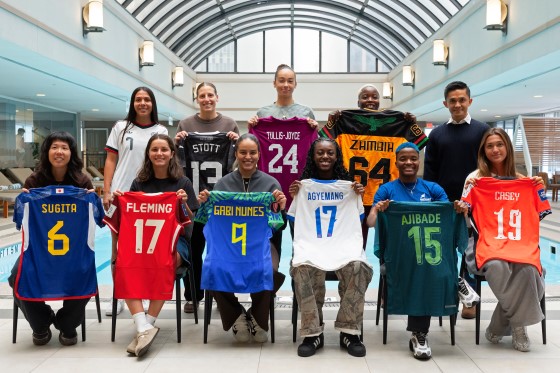
FIFA reports that the gathering in Boston, Massachusetts, was a starting 11 that would make any football fan look twice. But while this year’s record-setting FIFA World Cup 2026 shone a global spotlight on North America, these 11 players came together for a different purpose – not to compete for trophies, but to explore how they can turn their football influence into meaningful change for the causes that matter most to them.
In June, 11 of the 13-strong second cohort of FIFA’s Player Impact Programme were united for the initiative, which empowers players to harness their voice, platform and resources to drive positive social change. Building upon the success of its female-only pilot in 2025, the programme recognises that whilst players leave their mark on the pitch, they also have a unique opportunity to inspire future generations and create lasting impact around the world, backed by FIFA’s support.
Last year’s participants went on to launch foundations, establish football academies and partner with non-profit organisations to address challenges they had often faced first-hand during their careers. This year’s star-studded cohort includes a FIFA Women’s World Cup™ winner and the programme’s first male participant – iconic Indian striker Sunil Chhetri – reflecting the programme’s growing ambition and reach.
“I firmly believe that sport can change lives,” said Alexia Putellas, a FIFA Women’s World Cup winner with Spain and one of the course’s participants. “And I wanted to give access to all those girls who don’t have the same opportunities I had – for example, due to financial, family or cultural problems – and I wanted to target those girls to allow them to play sports, not just for the sake of playing sports, but also so that they could have those values that being on a team and playing sports instils in you, such as confidence and the sense of belonging to a group which, ultimately, I think can have an impact on their lives. That was my goal.”
“As players and coaches, we spend our careers building a legacy through what we do on the pitch: the big save, the match-winning goal, the last-ditch tackle,” said FIFA Chief Football Officer Jill Ellis, who met the participants in Boston. “But one of the questions we should all ask ourselves is: what legacy are we leaving beyond the game?
“Today we have a reach that extends far beyond 90 minutes. Through social media and the platforms available to us, we have an incredible opportunity not only to connect with fans, but to influence communities, create opportunities for others, and drive meaningful change. That’s the kind of impact that lasts well beyond the final whistle.”
In Boston, the players took the first step in their impact journeys by taking part in a three-day Impact Accelerator Workshop.
Drawing from their experience and inspired by each other’s stories, players left with a clearer understanding of how the nine-month programme will support them with the skills, resources and guidance needed to turn their projects into reality.
Over three days, the group of players shared their personal journeys and the goals they have set for themselves through group discussions, practical exercises and expert-led sessions. The result was a series of powerful, engaging and constructive exchanges that will ultimately create lasting change in their communities.
Full list of players:
Alexia Putellas – Spain
Casey Phair – Republic of Korea
Gabi Nunes – Brazil
Hina Sugita – Japan
Jessie Fleming – Canada
Kenza Dali – France
Maria Sanchez – Mexico
Michelle Agyemang – England
Phallon Tullis-Joyce – USA
Racheal Kundananji – Zambia
Rasheedat Ajibade – Nigeria
Rebekah Stott – New Zealand
Sunil Chhetri – India
“This programme is really important because it helps you realise the power of your voice, and that people are influenced by what you do and what you say,” said Arsenal and England attacker Michelle Agyemang MBE. “It is also important to give back to the community you come from.”
With the support of world football’s governing body and the expertise of a leading external specialist in sport for social impact, the participants receive tailored guidance as they work to turn their ideas into action. The FIFA Player Impact Programme is designed to empower players to drive positive change in causes and communities that matter to them. Education, mental health, and equitable access to sport are among the main causes championed by the footballers taking part.
I’m really happy that I got this opportunity,” said former India international Sunil Chhetri, who, at 42, is still playing in his homeland. “I cannot wait to put those lessons into practice. I don’t think there is a difference between) a man and a woman here; we are just meeting amazing personalities, some amazing top-class players from different countries.”
Chhetri’s words perfectly encapsulate the ambition of the FIFA Player Impact Programme: to bring footballers from every background together around a shared belief. Their influence is felt on the pitch, but the legacy they leave can reach far beyond football. The next milestone in their impact journey will come in December, when participants gather in London and join virtual sessions to present their projects to their peers.