By Fẹ́mi Akínṣọlá
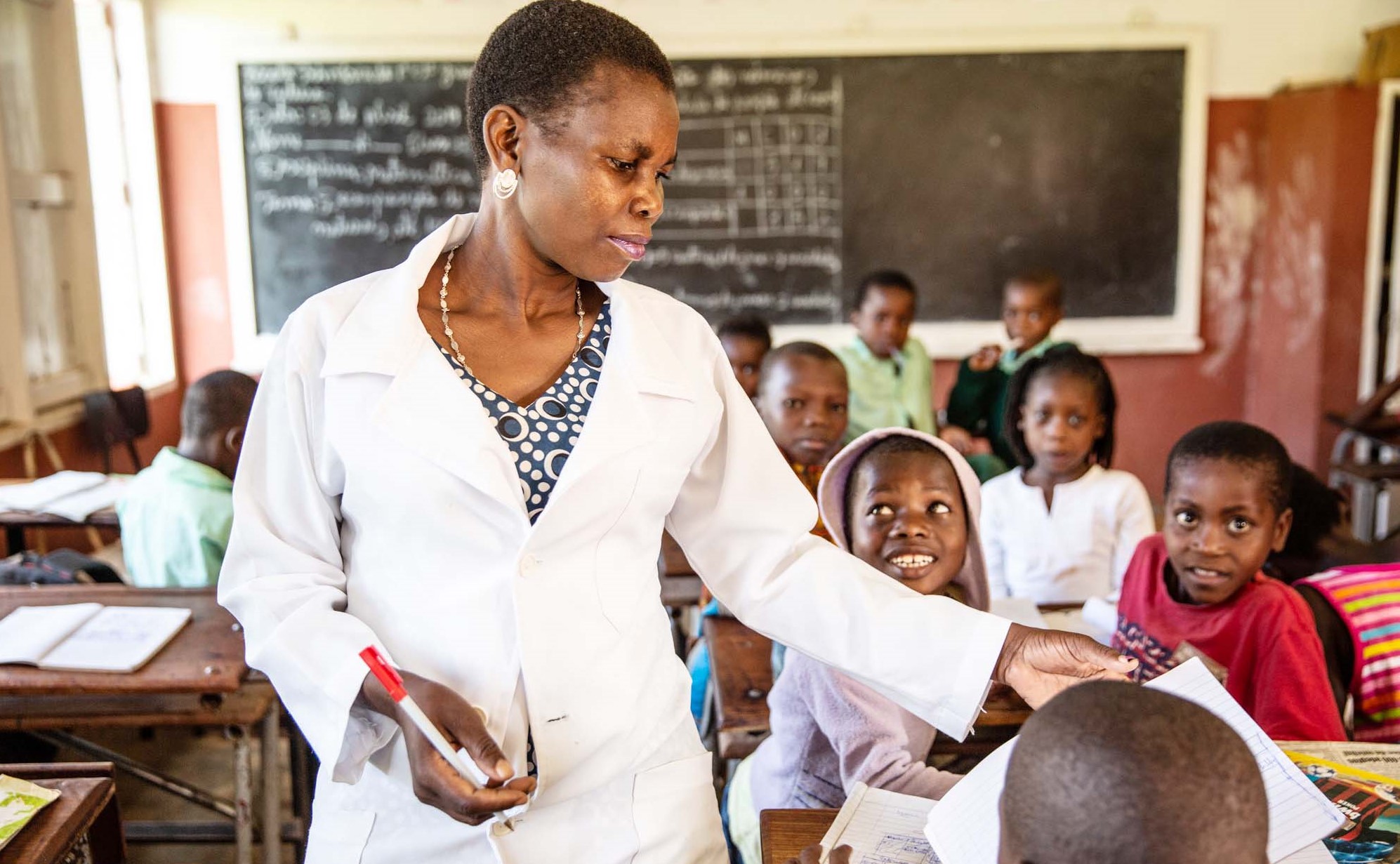
I returned to my old primary school on 5 October. The gate was locked. Not for Teachers’ Day. But because it was a normal teaching day. Inside, pupils were copying notes from a cracked board while the proprietor supervised from his office. When I asked a teacher why there was no observance, she whispered, today is revenue. If we do not teach, we do not get paid. In that moment, I understood our national hypocrisy. We ask teachers to build the nation, but we cannot spare one day to honour them. Some public schools were no better. A circular was pasted; no assembly, no lesson on why the day matters. We have schools that cannot celebrate their own builders and still call themselves schools.
That morning in Ibadan captures Nigeria’s story. We praise teachers in public and starve them in private, and we have perfected the system that makes this possible.
Nigeria Labour Congress President Joe Ajaero captured it clearly when he said Nigeria has perfected the art of praising teachers to high heavens while starving them on earth. A teacher with sixteen years’ experience, teaching four subjects across six classes in a private school in Rivers State, earns forty thousand naira monthly, far less than the seventy thousand naira minimum wage. Another teacher in the FCT earns thirty thousand naira less than that minimum wage. In many private schools, teachers with over three years’ experience are paid as little as fifteen thousand naira. These are not isolated cases. They are the norm. And they endure because three forces sustain them.
First is structural neglect. UNESCO recommends 4 to 6 per cent of GDP and 15 to 20 per cent of public expenditure for education. Nigeria spends 0.32 to 0.5 per cent of GDP. The money simply does not reach the classroom. Despite a Supreme Court judgement in 2002 placing primary education under state governments, policy made it the exclusive responsibility of local governments. Many councils are insolvent. The seventy thousand naira minimum wage was signed in 2024, yet in Abuja teachers struck for months because area councils refused to implement it despite increased federal allocation. Some received only a fraction. Over 250 billion naira in UBEC matching grants sits idle because states cannot provide counterpart funding, while former governors divert education funds to other uses. The teacher in the village bears the punishment for a theft he did not commit.
Second is the economics of exploitation. Public schools starve teachers through diversion. Private schools starve them through greed. Many owners collect one hundred thousand to three hundred thousand naira per term per child and pay teachers fifteen to forty thousand naira, with no contract, no pension, no right to unionise. The NLC has demanded that private school teachers be allowed to form and join unions, but enforcement remains weak. Teachers buy chalk from personal savings, print questions with personal money and use personal data and airtime to download lesson notes. In effect, they subsidise a system that taxes them twice, with labour and with cash. UNESCO says Nigeria needs 250,000 new teachers annually. Over seventy per cent of our children lack foundational literacy. Between 10.5 and 18.3 million children are out of school. The average pupil-teacher ratio is 54 to 1. Over 5,000 lecturers leave yearly; 2,300 have relocated to the United Kingdom since 2021. The University of Lagos lost 1,800 of 3,000 academics. No economy grows when its workforce cannot read instructions.
Third, and most painful, is betrayal from within. The union, which should be the shield, has too often become the second oppressor. Every month, check-off dues, development levies, welfare levies, co-operative deductions and endless special contributions are deducted at source from teachers who already earn below minimum wage. A teacher in Jos earning fifteen thousand naira loses a percentage to a union that cannot guarantee his salary. A teacher in Rivers earning forty thousand naira pays dues for sixteen years and still has no house, no health insurance, and no legal defence when his salary is slashed. What is there to show for it? No functional housing scheme, no credible health cover, no pension follow-up that ends the death queue, no litigation fund that protects a teacher sacked for refusing to falsify results. Any teacher who complains is labelled anti-union or anti-government. Queries are weaponised. Transfers to remote villages are used as punishment. Branch meetings are choreographed to endorse leaders who have stayed for decades. Dissenting teachers are told to be patient while the leadership romances government in Government Houses. Strikes are called, teachers stay home for months without pay, children are locked out, parents suffer, then a deal is struck behind closed doors. The strike is suspended with no clear gain for members, but with juicy appointments, board memberships, land allocations, political tickets, or quiet settlements for leaders. The rank and file return to class poorer, with arrears converted to half pay in the name of compassion. The union also inconveniences teachers with policies that protect its revenue, not its members. It resists independent unionisation of private school teachers because monopoly is profitable. It issues directives that teachers must not speak to the press about unpaid salaries while it speaks to the press about solidarity visits to governors.
The crisis wears a female face and a rural wound. Primary and private school teaching is dominated by women, many widows and single mothers, earning fifteen to forty thousand naira with no maternity protection or health cover. When you break female teachers, you break the first role model for girls. That fuels out-of-school girls, early marriage, and intergenerational poverty. Rural postings reveal the same wickedness. Teachers sent to villages face no accommodation, no hardship allowance, no security. So they pay bribes to stay in cities, rural schools remain empty, and we blame them for poor outcomes. A 2024 UNESCO report found over sixty per cent of educators in sub-Saharan Africa live with chronic stress. Teachers who absorb the trauma of hungry pupils and return home to debt cannot inspire creativity.
Contrast this with nations that value teachers. In Finland, teaching is among the most selective tracks, requiring a master’s degree, with only the top ten per cent accepted. In Singapore, salaries are benchmarked against the private sector with one hundred hours of paid development yearly. In South Korea, teachers are called nation builders, ranked between doctors and engineers. Switzerland and Luxembourg pay seventy to one hundred thousand dollars or more. Even within Africa, Nigeria is an embarrassment. A Nigerian professor earns about 4,400 dollars annually, while a South African professor earns 57,471 dollars, more than thirteen times higher. Kenya pays 48,000 dollars, Uganda 50,595 dollars. The excuses are dishonest. Governments speak of constraints yet find billions for luxury vehicles and foreign trips. The 290 billion naira shortfall for teacher salaries reported in 2025 is not scarcity. It is misplaced priority.
Retirement is where the betrayal becomes final. After thirty-five years of chalk dust, teachers join a death queue under the sun, carrying files from office to office, borrowing to treat illness, while gratuity remains unpaid for three, five, even six years. In Oyo State, hundreds of retired primary school teachers are trapped in poverty, ill health and neglect. Ademola Salami, who gave more than three decades, still waits for his gratuity six years after retirement, his pension vanishing instantly into debt, borrowing to treat an ulcer. We tell young graduates to embrace teaching, yet show them a future of endless verification and half pensions. No profession can survive when its ending is a warning. A former Vice-Chancellor of the University of Ibadan warned that a nation that impoverishes its teachers undermines its future.
We have come full circle to that locked gate on Teachers’ Day. A nation that cannot honour its teachers for one day cannot rebuild its politics, economy or security. The classroom we refused to honour is the nation we lost. Every bandit was once a pupil whose school had no teacher. Every vote buyer was once a child who watched grades being sold. Every official who diverts UBEC funds first learned diversion when PTA levies disappeared. Teachers taught almost every stakeholder in Nigeria’s affairs. The question is what version of Nigeria we allowed them to teach: hungry, silenced, indebted and divided between broken builders and a few corrupt enablers, with unions that deduct and government that diverts, parents that bribe and owners that exploit.
If we want a different Nigeria, let this Teachers’ Day be the last day we praise in public and punish in private. Make 5 October a compulsory observance in every school, public and private. Make teachers’ salaries a first-line charge that no council chairman or proprietor can touch. Enforce living wage and union rights in private schools. Provide rural hardship allowances and decent accommodation. Automate gratuities and pensions and pay on time to end the death queue. Audit union dues, publish accounts, cap tenure and protect whistle-blowers. And enforce TRCN licensing so miracle centres and sex-for-grades are sanctioned, not recycled. Teachers are not asking for charity. They are asking for justice, a living wage, dignity in retirement, tools to do their jobs and respect for their dedication. A country that starves its teachers in reality has lost its moral compass, and no amount of glossy speech on 5 October will save it.
Fẹ́mi Akínṣọlá is a public affairs analyst and development writer.